December is consistently one of the worst months of the year for abusive payment messages, with blocked messages in electronic payments rising around 7% above the monthly average of 14,000, new NAB data shows.
19.12.2025 | 2 min read


21.01.2026
Criminals are using social media to impersonate well-known Australians, including nabtrade’s Tom Piotrowski, to lure people into investment scams and rip them off.
Investment scams starting on social media platforms and websites are up 15% in the past six months.
NAB experts share how you can spot the red flags.
NAB is warning customers and the community about investment scams as new data reveals a 15% increase in the number of these scams starting on social media platforms and websites.
Investment scams are the number one scam impacting customers by loss value and can involve shares, term deposits, cryptocurrency and fake initial public offerings.
In a recent scam example, criminals used images of nabtrade market analyst Tom Piotrowsk to make it appear he was “endorsing” shares, which he was not and cannot legally do.
Mr Piotrowski is among other high-profile figures whose image has been used in scams. Others include global stars like Kevin Costner, Kylie Jenner and Elon Musk and Australians Robert Irwin, Gina Rinehart, Karl Stefanovic and David Koch.
NAB Executive, Group Investigations Chris Sheehan said social media platforms remained the breeding ground for investment scams.
“While total investment scam reports have remained relatively steady over the past six months, the number starting on social media platforms and websites grew by 15%,” Mr Sheehan, a former Australian Federal Police executive, said.
“About 70% of investment scam losses start with a social media platform or website. Unfortunately, and despite ongoing action and education, that stat remains steadily stubborn. This re-iterates the need for a co-ordinated, national approach across businesses, social media organisations, governments and the community to stop the crime before it happens.”
Mr Sheehan said while investment scams took many forms, the major red flag was urgency to act quickly so you didn’t miss out on an opportunity.
“For example in a pump and dump scam, criminals artificially inflate – or pump – the price of a small cap stock by creating hype through WhatsApp groups, ads they’ve purchased on social media platforms or ‘endorsements’ from celebrities or high-profile figures to lure people in. Once the price rises, the criminals quickly sell – or dump – their shares at the inflated price. This causes the stock to collapse and leaves everyday investors with the losses,” he said.
“Digital platforms use sophisticated algorithms to push content to people based on the user’s search history. For example, images of Tom were shared via social media ads and via WhatsApp to deliberately deceive people.
“Changing your social media settings to restrict or limit the ads you receive and changing your WhatsApp settings to block calls and texts from unknown numbers are other ways to protect yourself.
“Pump and dump scams are a global issue, with the US FBI even issuing a warning about them last year.”
Mr Piotrowski, who recently started at nabtrade, said it was devastating that people had lost money to scams using his image.
“I will never contact you directly about an investment opportunity. If you are contacted directly by ‘me’ on social media or via WhatsApp, it is a scam,” he said.
“Other scam red flags are promises of guaranteed returns from a single company or urging that you need to buy a stock now before it shoots up in value. I would never do this.”
NAB prevented the loss of $385m of customers’ money, while investing over $900m to protect customers from fraud, scams, cyber and financial crime in the year to 30 September, 2025.
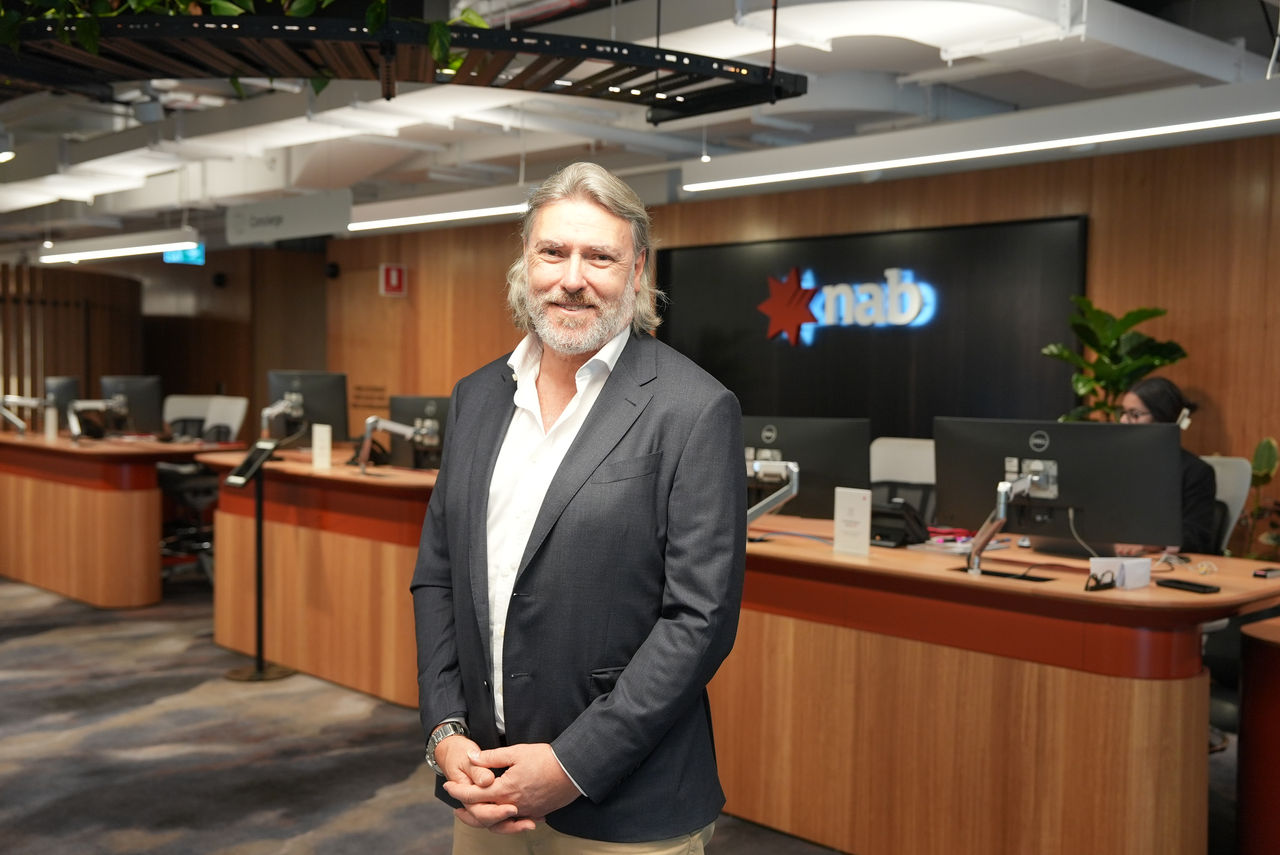 Tom Piotrowski, nabtrade's Head of Market Insights
Mr Sheehan said the bank continued to take specific action to tackle investment scams.
“We have real-time payment alerts in the NAB app and Internet Banking that customers may receive if a payment appears out of character or has scam red flags. This is designed to get the customer to slow down and consider where they are sending money,” Mr Sheehan said.
“We are also working with a behavioural scientist to understand the psychology behind investment scams and to help us implement more effective, targeted interventions to protect our customers.”
Stay up to date with the latest scams and fraud information available at nab.com.au/security.
Notes:
Investment scam data relates to the period 1 July – 30 December 2025.
A 15% increase in investment scam reports linked to social media platforms compares data from 1 July – 30 December 2025 to 1 January – 30 June 2025.
Insights are based off customer calls to NAB’s contact centre.
Data about the loss of customer money is sourced from NAB’s FY2025 Full Year Investor Presentation (page 46)
nabtrade is a self-directed trading platform that offers execution services and no personal advice.
Tom Piotrowski is a market analyst at nabtrade. Tom does not provide personal advice and is not licensed to do so.

Scams & Cyber Security
December is consistently one of the worst months of the year for abusive payment messages, with blocked messages in electronic payments rising around 7% above the monthly average of 14,000, new NAB data shows.
19.12.2025 | 2 min read

Scams & Cyber Security
When Sue walked into the NAB’s Bourke Street branch to open a new account for receiving overseas money, NAB banker Angus Murdoch quickly sensed something wasn’t right.
12.12.2025 | 2 min read

Scams & Cyber Security
Be alert. That’s the message from NAB’s fraud and scam experts on the eve of the nation’s biggest annual shopping period as criminals prey on shoppers hunting a bargain.
20.11.2025 | 2 min read