The latest NAB research shows 40% of SMEs are actively using AI, with a further 13% planning to adopt. Among those using AI, 22% report significant transformational improvements.
01 July 2026 | 2 min read


25 February 2026
Throw out the tech-bro stereotype.
A snapshot of NAB’s growing AI workforce reveals a surprising diversity of skills, experience and roles, as well as people doing them.
“I feel like I’m at the forefront of something really exciting,” said Ai-Linh Tran, a product owner who began her career in HR.
Ms Tran describes her work as ‘building bridges’ between issues bankers identify, and potential solutions - including AI - to address them.
“They see customers waiting for an account or a decision and think ‘this could be done a better way’ – but don’t know what the solution is, so they’ll reach out to me.
“You are the bridge between the technical team and the business, translating solutions to requirements or requirements into something technical.
“Then I’ll package that up, working with engineering teams to understand the effort and complexity of work, and play that back to the business to help them understand: ‘This is what a solution could look like, this is the AI component, this is the outcome it will achieve over time,'” Ms Tran said.
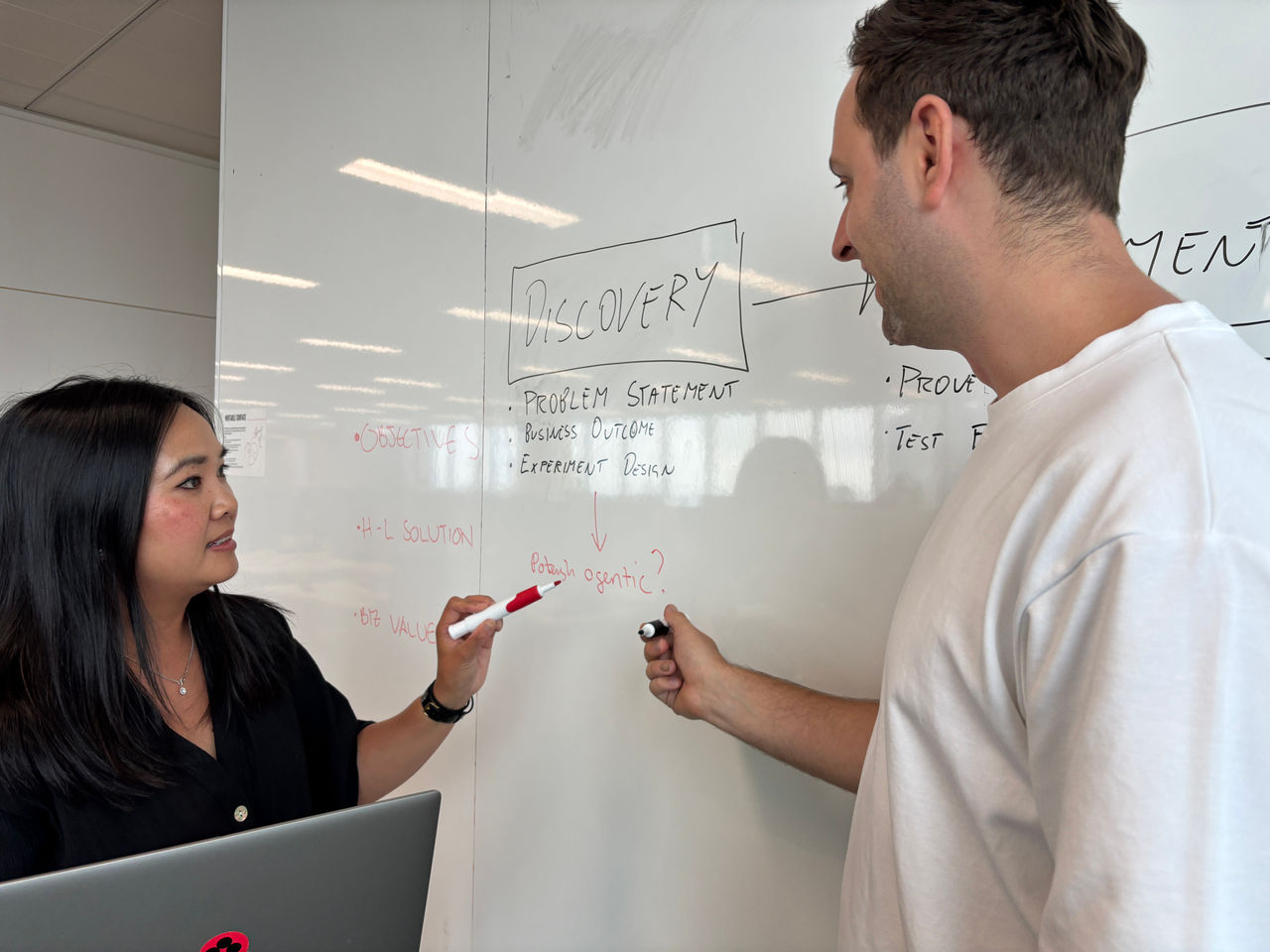
Ms Tran is an example of the market springing up for non-technical AI-related roles, as more AI use cases are validated, driving demand for strategy, implementation, adoption and governance skills.
Business analysts, prompt engineers, product and program managers, strategists and engagement roles are prominent in NAB’s AI hiring, set to grow substantially.
NAB’s Group Executive for Digital, Data & AI Pete Steel likens the moment to the advent of another transformational technology, electricity.
“We have AI Scientists who are building and training our AI models – they’re the new power stations. We have domain experts who are applying AI to some stubborn problems and opportunities – they're our new electricians. But what we’re seeing is the real change happening as people ‘flip the switch’ and realise AI will touch every colleague role in the bank in some way. Fundamentally AI will change for the better how we operate and how we serve customers.”
Underscoring its commitment to accelerate AI talent development, NAB has recently appointed Dr Mahya Knox as Chief AI Officer.
“AI is already helping our customers save money, avoid scams, earn interest and get faster decisions. But this is only the beginning. It’s reshaping the way we serve customers and lifting the standard of banking in Australia," Mr Steel said.
“We are growing our teams and investing in capability to create AI career paths. People understandably worry about AI-driven job losses, however the people we’ve hired and are about to hire point to a bigger story of transformation, of new roles and career pathways emerging to utilise this new capability."
Public polling and research consistently show a majority Australians are concerned AI creates more problems than it solves and are sceptical of how businesses will use it.
“Our AI culture is very simple – we use it where testing shows we can offer our customers and colleagues a benefit - safely,” Mr Steel said.
“The AI-powered customer experiences of the future will be shaped by a mix of skills - strategists, builders, activators - and we’re committed to developing those capabilities and AI muscle across NAB."
AI, Analytics & Data Literacy are foundational elements of NAB’s AI approach.
“AI will reward organisations that invest in capability, not just tools. Our success depends on how deliberately we grow our people alongside the technology,” NAB Executive for Capability and Culture Darren Clarke said.
“We’ve worked to identify the emerging and future skills required to future proof our workforce, and that work underpins a comprehensive suite of learning, practical reskilling and upskilling, so our people can embrace this change, just as previous colleagues have - when computers came along for example.”
Ms Tran has a message for others – especially young people – unsure of what the technology means for their futures.
“You don’t need to be a tech-bro,” she said matter-of-factly, identifying the ability to relentlessly interrogate a problem-solving as an essential transferrable skill for strategic roles like hers.
“Have a baseline level of technical understanding - which anyone can do,” Ms Tran said.
“But then leverage those interrogation skills. Knowing what to ask the business and really getting under the hood of what the problem is and what we want to achieve together – that’s going to be how we work to serve our customers in an AI-enabled future.
“To anyone who thinks this is just for data scientists – think again, there are so many opportunities."