1 July 2026


  • 1 in 5 SMEs using AI report transformational improvements.
  • Business Services lead the way, with 34% of firms reporting strong improvements.
  • Workforce readiness remains the key barrier to wider adoption.

One in five Australian small and medium businesses using AI are already seeing transformational benefits, as the technology moves from trial to practical use inside everyday business operations.

The latest NAB research (PDF, 636KB) shows 40% of SMEs are actively using AI, with a further 13% planning to adopt. Among those using AI, 22% report significant transformational improvements.

NAB Head of Behavioural and Industry Economics Dean Pearson said AI’s impact was showing up first in how businesses operate.

“AI is starting to deliver tangible benefits for small businesses, but the impact is most striking in how work gets done,” Mr Pearson said.

“For many SMEs, transformation begins inside the business, in faster workflows, better use of information and improved customer engagement, before it shows up in financial performance.

“Business Services shows what is possible when firms have the data, processes and confidence to put AI to work. These sectors are moving faster, while others will need greater support to build capability that enables them and the economy to be more productive.”

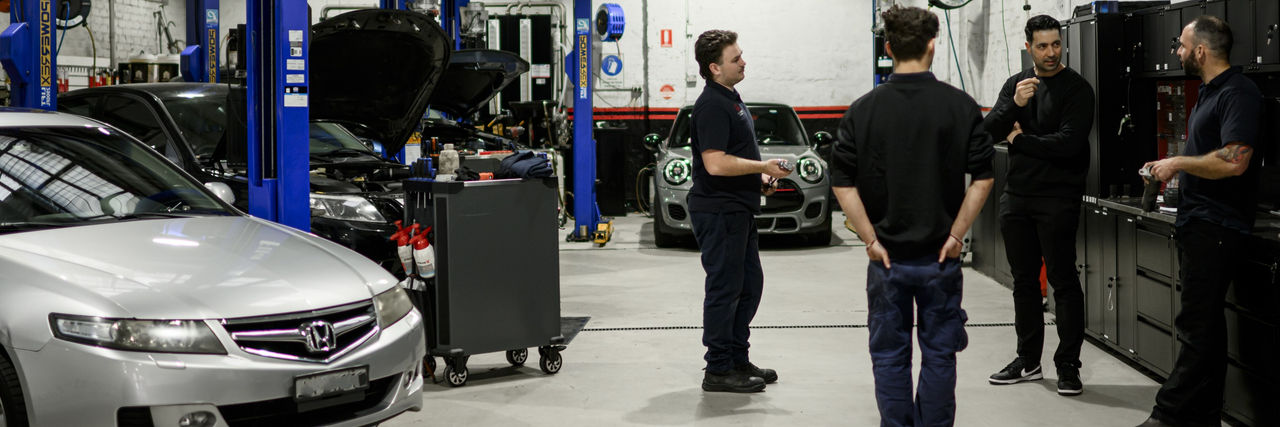
Mechanic Peter Leondis

How a Sydney mechanic is growing bookings

NAB’s research finds that practical benefits from AI are the most visible, with 58% citing productivity, 46% marketing and 36% customer service, well ahead of profitability (9%) and revenue (7%).

The practical benefits are flowing through to the bottom line for business owners such as mechanic Peter Leondis, the owner of Leondis Automotive, which now operates three sites in Sydney.

“We’ve built our reputation over 15 years on quality workmanship and customer service, and we’re always looking for ways to keep improving how we do that,” Mr Leondis said.

“As we’ve expanded to become a multi-site workshop, one of our biggest challenges was simply keeping up with enquiries and not missing opportunities.

“We’ve started using an AI tool to follow up missed calls and unfinished bookings with a simple text. Even at small volumes, it’s already converting leads we would have missed.

“I am a mechanic and I do love building and tinkering, so I’ve used an open-source model connecting to a voice agent we’ve called ‘Zoe’ to handle missed calls any time of the day or night and follow up unfinished bookings.

“It means we can respond to customers faster and answer more complex questions even outside business hours. It’s helping us nurture more leads, improve conversion, and reduce our cost to acquire new customers.”

Capability is the next challenge

While the upside is becoming clearer, the latest SME research also points to a capability gap. SMEs rate workforce readiness for AI at just 3.8 out of 10, with only 17% saying their workforce is highly prepared.

NAB Executive, Small Business Krissie Jones said more SMEs were turning to AI to change how work gets done and, in turn, saving time, cutting admin and freeing up capacity to focus on growth.

“We’re starting to see what’s possible when AI actually lands in a small business and it’s pretty powerful,” Ms Jones said.

“A Queensland manufacturer we’re working with has gone from a week to 10 minutes to turn around quotes. Meanwhile, in Canberra, a local mechanic is using AI to make sure they don’t miss customer calls.

“The challenge is most businesses aren’t there yet. They know AI matters, but it still feels out of reach.

“And let’s be honest, it’s a tough environment right now. Costs are up and pressure is on.

“But small businesses are nothing if not resilient. They’re adapting, they’re problem-solving and with the right support, they can use AI to get ahead, not fall behind.

“That’s where we’re focused – providing resources on nab.com.au to make AI simple, practical and actually useful for Australian businesses.”

Key findings from the latest SME research include:

  •  40% of SMEs are actively using AI, with a further 13% planning to adopt.
  • 22% of SMEs report transformational improvements from AI.
  • Workforce readiness is rated 3.8 out of 10, with 17% highly prepared.
  • SMEs are cautious about AI’s potential to create new jobs, with an average confidence score of just 2.7 out of 10, and only 10% highly confident it will drive employment growth in their industry.

 

Topics


Media Enquiries


For all media enquiries, please contact the NAB Media Line on 03 7035 5015

Related Articles


Small business in the driver’s seat of Australia’s AI shift

Artificial Intelligence

 NAB Economics research reveals 42% of Australian SMEs are already using AI, with a further 14% planning to adopt it, signalling that a majority of small business owners are unafraid to experiment and embrace AI as an everyday business tool.

20 April 2026 | 3 min read

Case studies: How are small businesses using AI?

Artificial Intelligence

Two businesses, one interior design firm and another manufacturing business, explain how they utilise AI in their operations and the potential benefits for others.

20 April 2026 | 3 min read

Australian economy getting real about AI

Economic Market News

Artificial intelligence (AI) is beginning to show up in Australia’s economic data as it shapes investment, hiring and business operations. New research from NAB Economics and Markets Research finds the impact of AI is expected to build gradually and vary across sectors, firms and the workforce.  

29 May 2026 | 3 min read