The latest NAB research shows 40% of SMEs are actively using AI, with a further 13% planning to adopt. Among those using AI, 22% report significant transformational improvements.
01 July 2026 | 2 min read

20 April 2026
AI adoption accelerating, with small business driving the next wave
42% of SMEs use AI. Top uses include admin, marketing and decision-making
Biggest win is time back for business or family
Australia’s Artificial Intelligence story is moving from early adopters to the engine room of the nation’s economy: small and medium businesses.
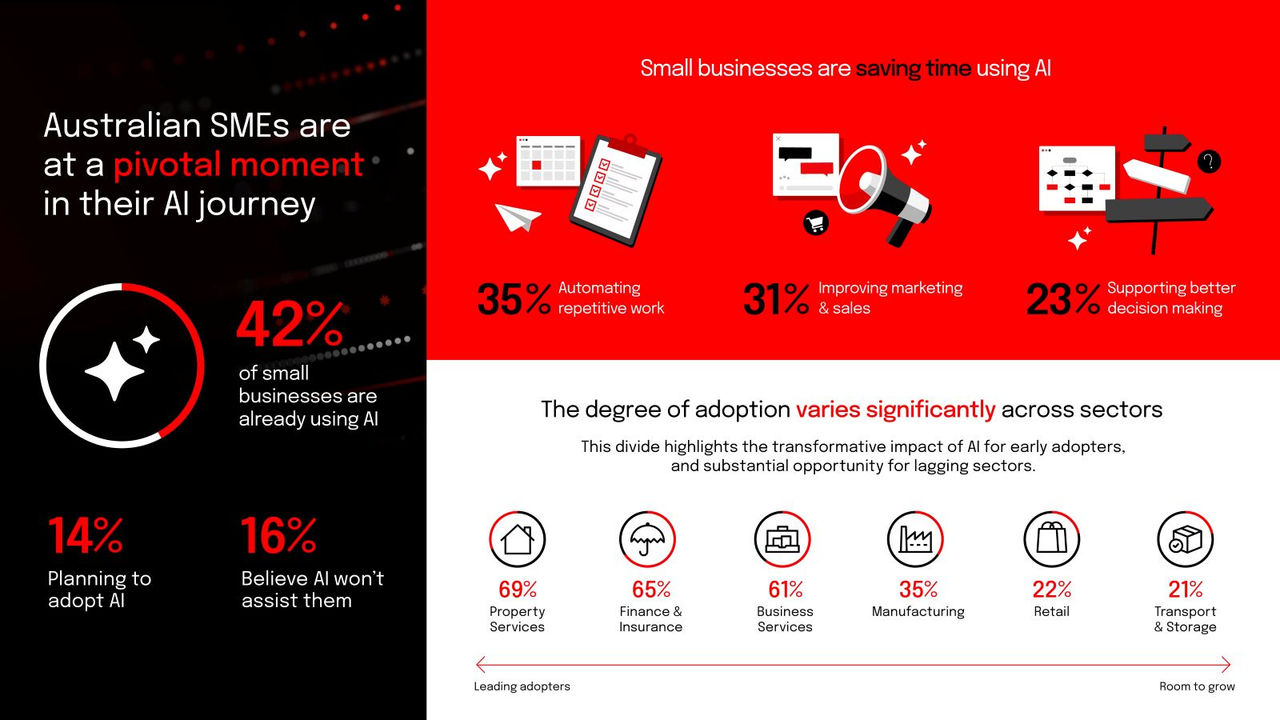
NAB Economics research (PDF, 1MB) reveals 42% of Australian SMEs are already using AI, with a further 14% planning to adopt it, signalling that a majority of small business owners are unafraid to experiment and embrace AI as an everyday business tool.
The next chapter is about AI adoption spreading across the small business community, so more businesses can share the benefits early adopters are already seeing. Almost half of SMEs (44%) are not using AI, highlighting the opportunity to build capability and practical application critical to help drive further growth and productivity for Australia’s economy. More than 98% of all Australian businesses are small and medium enterprises.
NAB Group Executive for Digital, Data & AI Pete Steel said Australians were inherently early adopters of technology and the nation’s SMEs had proven that AI was not just for big businesses.
“We’re seeing a clear shift from curiosity to practical use, with more businesses using AI to save time, reduce admin burdens and make better decisions,” Mr Steel said.
“Unlocking this adoption at scale across the economy has real potential to help Australia increase productivity and lift our global competitiveness.
“Australians have long demonstrated themselves as early adopters of technology and this research shows that mindset in action, they’re embracing AI, not scared of it.
“The opportunity now is to help many more companies through something that feels complex and uncertain - to adopt this technology safely and with confidence. Whether they are bakeries managing orders, wineries forecasting demand or restaurants reducing admin, this technology can help deliver real benefits for themselves and the broader Australian economy.
“It’s encouraging to see the Government supporting this growing appetite through offerings like the National AI Centre ‘AI Adopt’ and ‘Digital Solutions’ programs that offer tailored advice for businesses to help them achieve productivity benefits.”
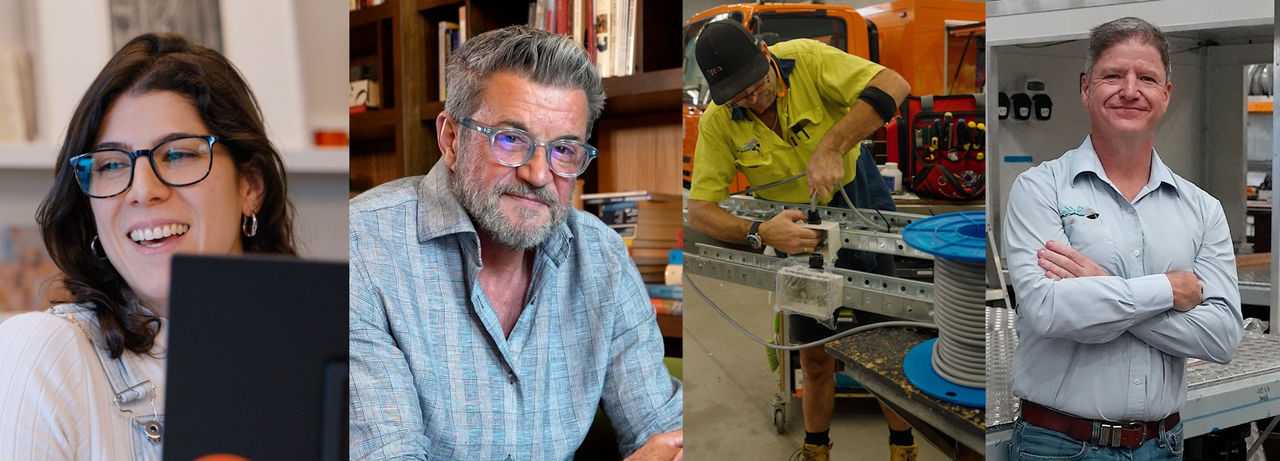
NAB customer Design and Diplomacy owner Tim Gauci said he was initially sceptical, but now uses AI it to analyse financial performance, make better decisions and speed up quoting and client onboarding.
“I invested time in understanding what AI is and how to use it properly in the context of my business, so the outputs were actually useful,” he said.
“If you want more free time, you need to work out how to use it. It doesn’t take long.”
Bella Manufacturing director Andrew Blair was also a recent convert, after initially assuming AI was only for highly technical people. Attending a practical workshop helped him start small and address privacy and security concerns.
“We’re using AI across marketing, sales, operations and logistics,” Mr Blair said. “The real value isn’t the technology. It’s the time it gives back.”
Notes:
Read our AI for small business FAQs