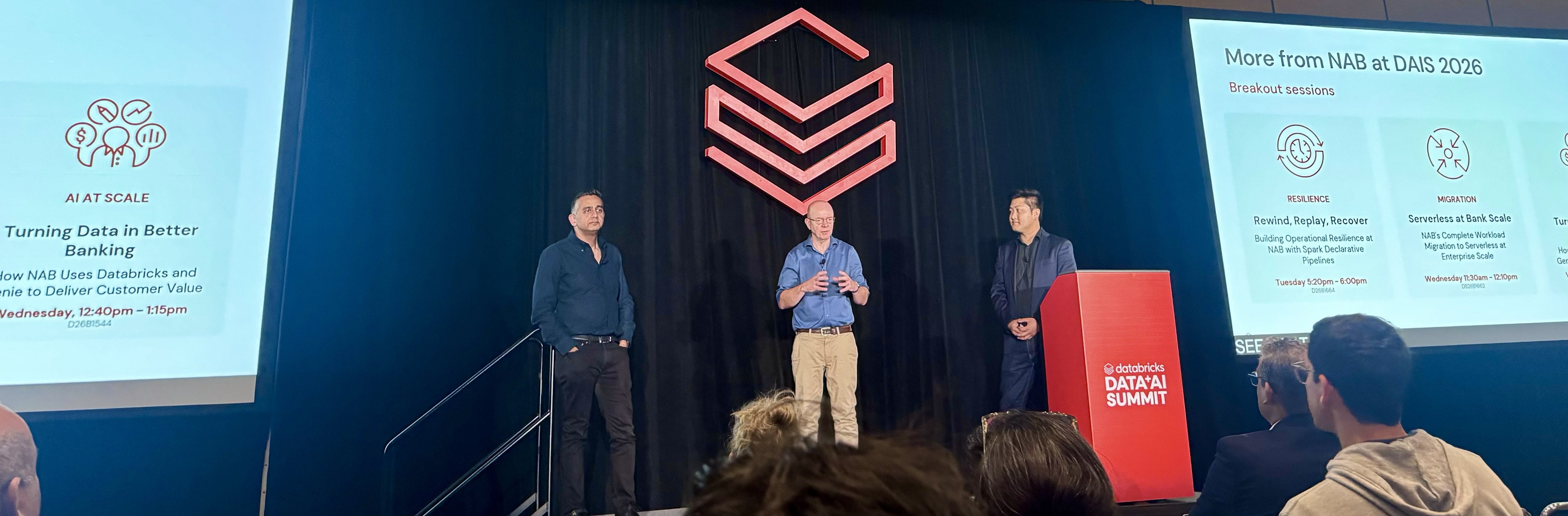
National Australia Bank (NAB) has begun rolling out a conversational analytics tool that makes querying complex datasets as easy as asking a plain English question and receiving answers in seconds.
18 June 2026 | 2 min read


20 April 2026
New to AI? This Q&A guide helps answer some common questions about what it is, how it works, and where to start.
For small businesses, AI refers to everyday software tools that help save time and support decision-making. This includes tools that summarise documents, draft written content, compare options or analyse information. In most cases, AI supports existing work rather than changing how a business operates.
AI can help reduce the time spent on routine and administrative tasks. When repetitive work takes less time, business owners and teams have more capacity to focus on customers, staff and higher value decisions. Even small amounts of time savings, applied consistently, can improve productivity over time.
Small businesses commonly use AI to:
summarise documents and extract key information
prepare first drafts of emails, reports or proposals
compare scenarios before making decisions
reduce time spent on administration
These uses are typically low risk and easy to integrate into day-to-day work.
For most small businesses, AI is not about workforce replacement. Its primary role is to assist with repetitive or time-consuming tasks, allowing people to focus on work that requires experience, judgement and human insight.
The main barrier for many small and medium sized enterprises is confidence rather than access. Business owners are understandably cautious about unfamiliar technology, especially when operating under cost pressures, regulatory requirements and constant change. Support is available – many business organisations suche as the National AI Centre, Governments and technology providers offer workshops and learning. Refer to the links at the bottom of this page.
No. Uptake varies by industry, with some sectors more confident using digital tools than others. Differences in how digitally exposed different sectors are, as well as factors like operational complexity often shape how comfortable businesses feel experimenting with new technology.
Starting with low risk, everyday tasks is often the safest approach. Using AI for activities such as document summaries or decision preparation allows businesses to test its value without disrupting core operations. Early benefits can help build familiarity and confidence over time.
AI can be used safely when businesses understand what the tool is doing, how information is handled and where human judgement remains important. Many businesses choose to use AI only for internal tasks rather than customer facing work while building confidence.
Access to technology alone does not lead to productivity gains. Businesses are more likely to benefit from AI when they feel confident about how it fits their needs, what risks to manage and how to stay in control of how it is used.
Small businesses play a central role in the economy. When many businesses make small improvements to how they work, those gains accumulate. AI’s long-term value lies in supporting steady, everyday productivity improvements rather than sudden transformation.
To learn more, visit NAB's small business hub to find tips and tools to support your small business, include a free guide on how to get started with AI.